
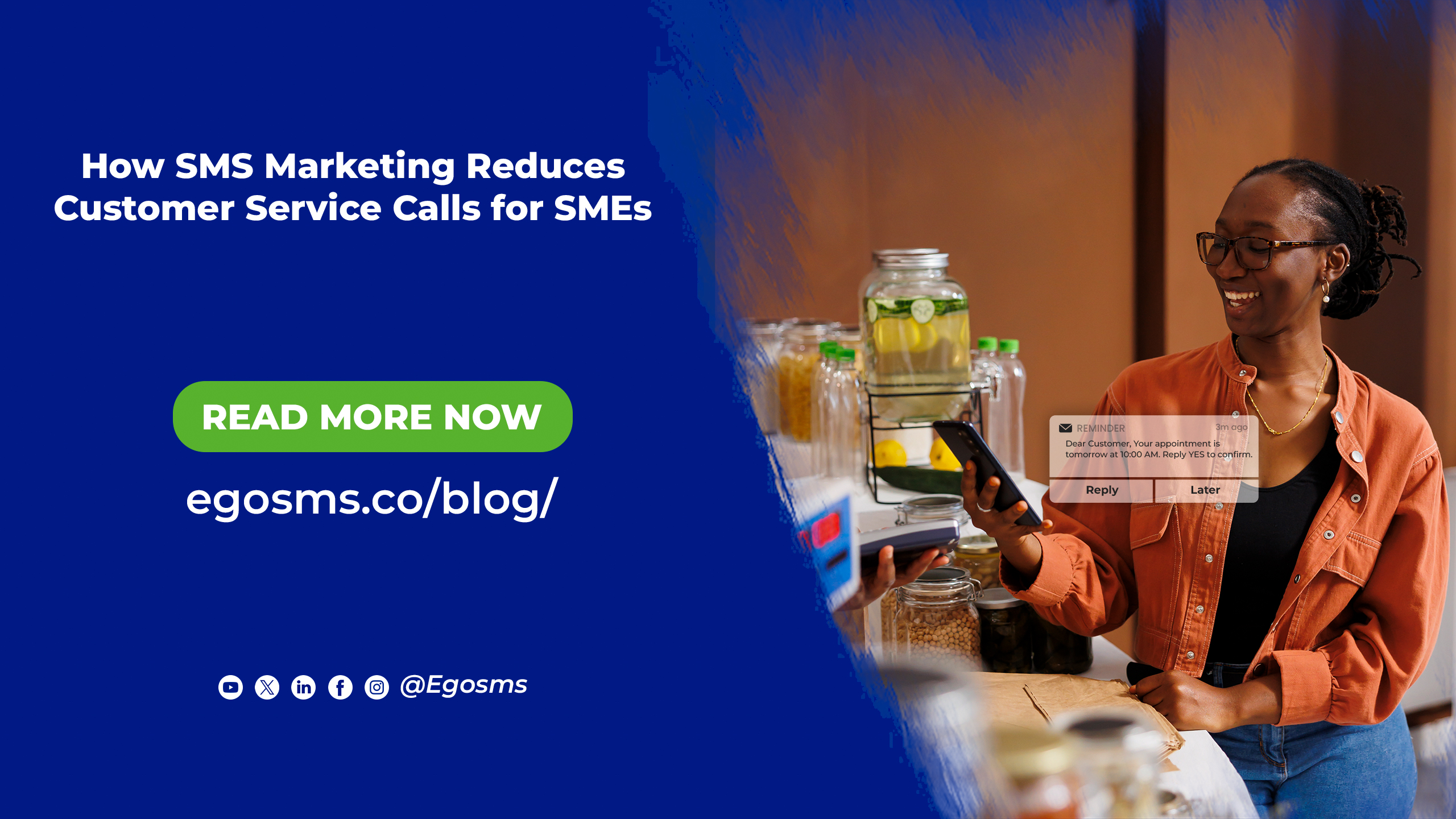
Running a small or medium-sized business (SME) involves more than just selling products or services. It requires managing customer expectations, responding quickly, and keeping customers informed. However, many growing businesses struggle with a common issue: an increase in customer service calls.
Customers often call to:
– Confirm payments
– Track orders
– Ask about opening hours
– Seek clarification
This is where using SMS marketing to reduce customer service calls becomes a valuable strategy.
When used effectively, SMS is more than just a marketing tool. It acts as a proactive communication system that helps reduce repetitive inquiries, prevent confusion, and allows your team to focus on more important tasks.
The Real Reason SMEs Receive So Many Support Calls
Many small and medium-sized enterprises (SMEs) think that a high number of calls means customers are engaged. However, this often indicates a different issue, a lack of clear communication. Customers usually call when they don’t have enough information.
Predictable Customer Questions
If you look at your call logs from the past two weeks, you’ll likely see some common questions. Most calls fall into these categories:
- “Has my payment been received?”
- “Where is my order?”
- “Are you open today?”
- “Can I reschedule my appointment?”
- “How do I redeem this offer?”
These are simple questions. They only ask for basic information. When businesses use only websites or email updates, customers may miss important details. SMS can help change this.
The Cost of Reactive Communication
Every repeated phone call takes away:
- Staff time
- Energy
- Productive hours
- Customer patience
For small and medium businesses, these costs can add up quickly. Employees spend hours answering the same questions instead of focusing on growth. Reactive communication makes your team respond after confusion arises. Proactive SMS can prevent confusion before it starts.
Why SMS Is the Most Effective Channel for Call Reduction
Email is useful. Social media is helpful. Websites are essential. However, SMS is the best choice for operational communication.
Immediate Delivery Advantage
SMS messages are delivered instantly and are typically read within minutes (Forbes). That speed makes it ideal for Payment confirmations, Delivery updates, Appointment reminders, and service notifications.
When customers receive updates in real-time, they feel informed and reassured.
Two-Way Communication Power
Modern SMS platforms allow two-way communication. This means customers can:
- Reply “1” to confirm
- Reply “R” to reschedule
- Reply “TRACK” to get order updates
- Reply “HELP” for assistance
Instead of dialling your support line, customers solve issues directly through structured responses.
That is how SMS becomes a call deflection system.
9 SMS Workflows to Reduce Support Calls
Order Confirmation Messages
Right after a purchase, send:
“Hi James, we received your order #3492. Estimated delivery: Friday 2–5 PM. Reply TRACK for updates.”
This helps reduce calls asking, “Did you receive my order?”
Payment Confirmation Messages
In areas where mobile payments are common, send payment confirmations to ease concerns.
“Payment of UGX 120,000 received for Order #3492. Thank you!”
This message can prevent many follow-up calls each week.
Delivery Tracking Updates
Provide updates at key moments:
– Order dispatched
– Out for delivery
– Delivered
These updates significantly lower calls asking, “Where is my order?”
Appointment Reminders
Use reminders for appointments at clinics, salons, schools, and other services:
“Reminder: Appointment tomorrow at 10:00 AM. Reply R to reschedule.”
This can help reduce calls and minimise no-shows.
FAQ Keyword Automation
Let customers text keywords for quick answers:
– HOURS
– LOCATION
– PRICE
– STATUS
Automated replies provide answers instantly, without needing staff help.
Delay Notifications
Keep customers informed to avoid frustration. If a delivery is delayed, say:
“Delivery delayed by 24 hours due to high demand. New ETA: Tomorrow 4 PM.”
Being proactive can prevent angry calls.
Service Acknowledgment Messages
When customers submit support requests, send:
“We’ve received your support request #8291. Response time: within 2 hours.”
This cuts down on repeated follow-ups.
Clear Promotional Instructions
Many promotions lead to calls because of unclear instructions. Instead, send:
“Use code SAVE10 at checkout before 8 PM today. Reply FAQ for help.”
Clear guidance reduces confusion.
Feedback and Issue Capture
After service, ask:
“Was everything satisfactory? Reply 1 for Yes, 2 for No.”
This helps identify unhappy customers early, preventing more serious calls later.
FAQs
How SMS Marketing Reduces Customer Service Calls for SMEs in Real Terms?
It reduces calls by sending proactive updates and allowing customers to resolve common issues via automated replies instead of phone calls.
Is SMS better than email for operational communication?
For time-sensitive updates like payment and delivery confirmations, SMS is more immediate and harder to miss.
Will customers find SMS intrusive?
Not if messages are permission-based, relevant, and limited to important updates.
Can SMS replace customer service teams?
No. It reduces repetitive inquiries while allowing teams to focus on complex issues.
Conclusion
Understanding how SMS marketing can reduce customer service calls for small and medium-sized enterprises (SMEs) starts with a key idea: most support calls can be avoided. When businesses reach out to customers clearly and quickly, customers are less likely to call for help.
SMS goes beyond being just a marketing tool. It serves as:
- A way to provide clear information
- A means to build trust
- A way to cut costs
- A method to increase productivity
For SMEs that want to grow without overloading their support teams, using SMS is not just an option; it is a smart strategy. Sign up on EgoSms to get started today!